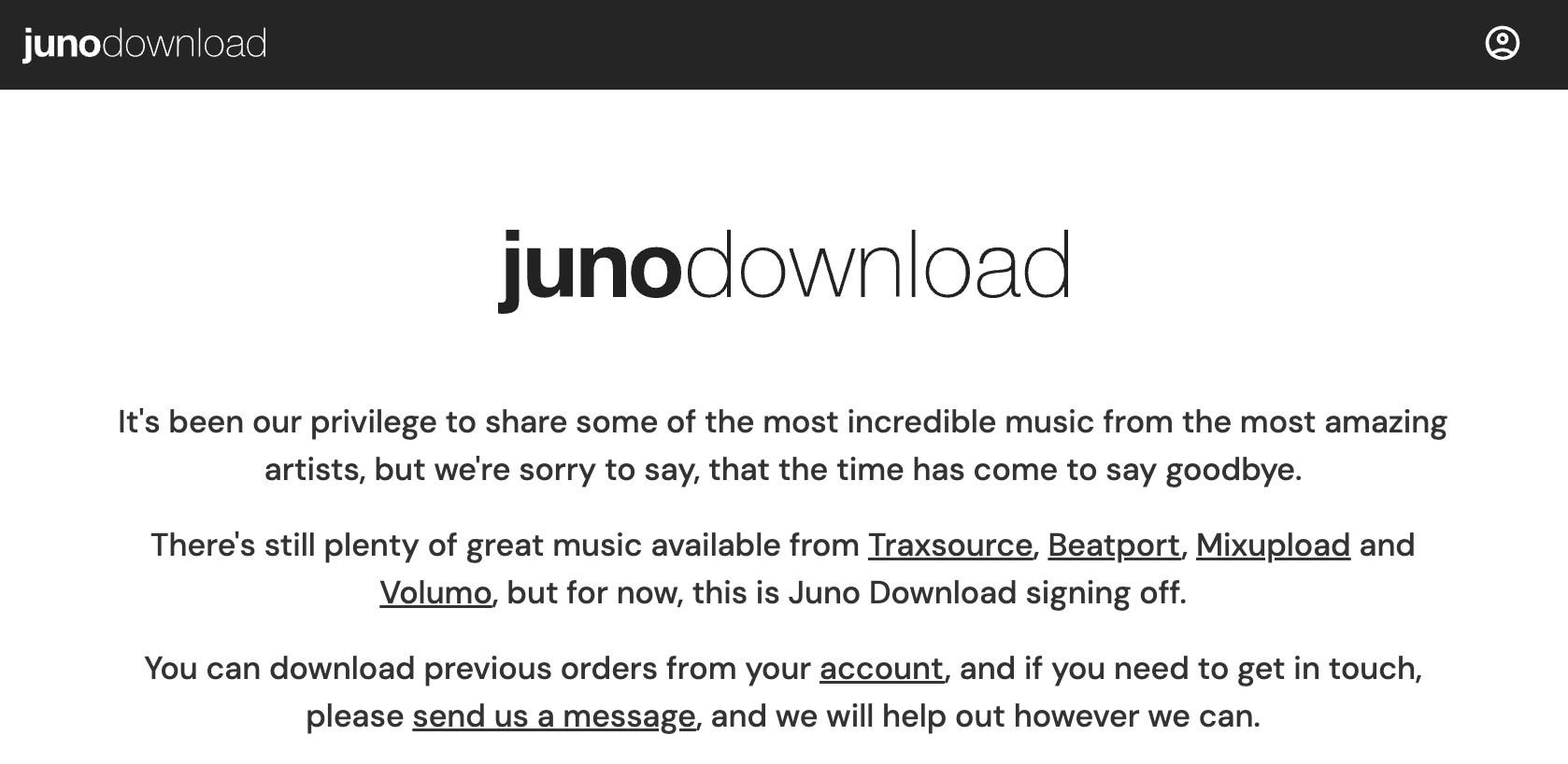
Juno Download is gone. Not winding down, not on sale, just gone. Anyone who visited the site on Monday morning found the catalogue stripped out and a short goodbye in its place, telling buyers “the time has come to say goodbye.” No countdown, no fire sale promo, no heads-up to clear your cart first. After about 20 years, one of the most DJ-friendly download stores on the internet flipped the lights off between one day and the next.
The store launched in 2006 as the digital arm of Juno Records, the London vinyl shop that’s been trading since the late 90s.
Only the download store died
Let’s start just by clarifying something: Juno Records, the vinyl-and-gear side, is still running. In fact, jun It’s the download store that closed. The two split in 2013 when Juno Download was sold off to a US company.
Why Juno mattered to DJs
For a long stretch, Juno Download was a store that DJs reached for when Beatport didn’t have the track or wanted too much for it. It often was cheaper than Beatport and it had a deep back catalogue. Diggers leaned on it for the stuff the bigger shops skipped: old UK hardcore, hard trance, jungle, dancehall, bootlegs that never surfaced anywhere else. If a record came out before 2015, there was a fair chance Juno had it when nobody else did.
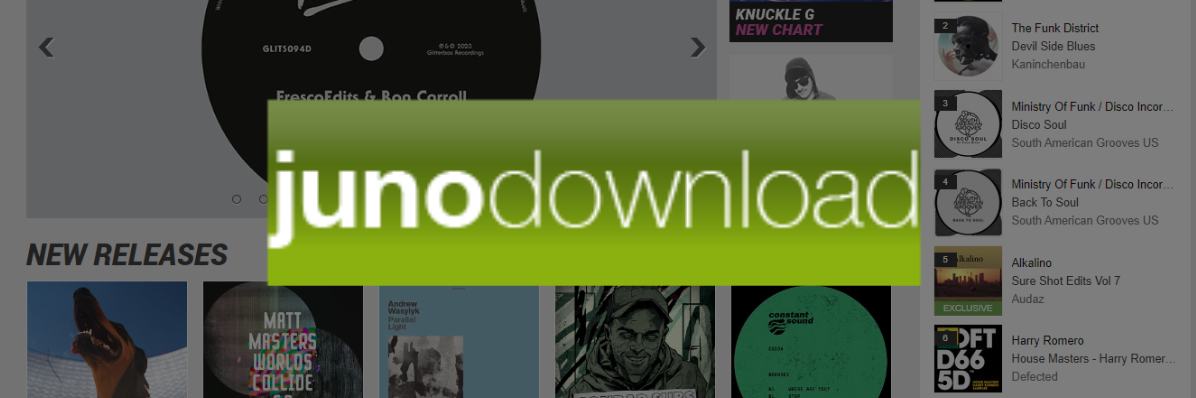
The bigger loss is the catalogue itself. When trackitdown folded a few years back, a chunk of UK hard dance and hard house went with it, releases that were never on Discogs and now live only on someone’s old hard drive. Juno going dark does the same thing again at a bigger scale. Perhaps the catalogue would migrate to a new home one day, but for now, it just disappears.
The official reason for the shutdown (and the pushback)
Juno’s own explanation is the one you’d expect: the economics have changed. COO Lucas Garcia framed it as a sad but obvious call: streaming runs digital consumption now, labels reach fans directly through Bandcamp and social media, and a standalone webstore matters less than it used to. The farewell note waves buyers toward Traxsource and Beatport on the way out.
“”It’s obviously a sad day, but as streaming has become the dominant model of digital music consumption, artists and labels are now more connected than ever with their fans via social media and ‘direct to fan’ services like Bandcamp, so the role of the music webstore is becoming less significant”” – Juno Download COO Lucas Garcia
He’s right about the trend, but that doesn’t mean it stings any less for our industry and community. Plenty of DJs want nothing to do with renting their music from a streaming service that can pull a track the day a license lapses or gets sold off. The whole point of buying is that the file is yours, sitting on your drive, ready when the club WiFi is non-existent.
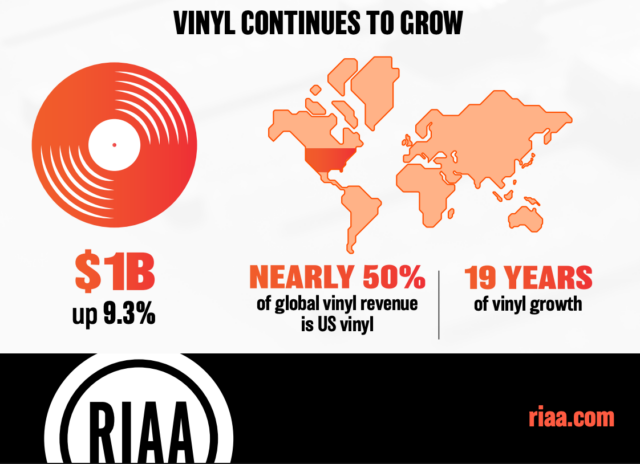
There’s a numbers angle too, and it complicates things a bit. The RIAA’s 2025 report shows that US digital download revenue is down again 1%, while vinyl climbed 9.3% to just over $1 billion. That’s the 19th (!) straight year of growth. People haven’t stopped paying to own music, but they have moved that money to wax. Downloads are getting squeezed from both ends, by streaming on convenience and vinyl on the pull of owning a physical thing. A mid-size independent download store stuck in the middle is a hard business to keep alive. Juno did push prices up over the last year, but apparently it wasn’t enough.
Where DJs go (to buy music) from here
So where does a working DJ buy music now?
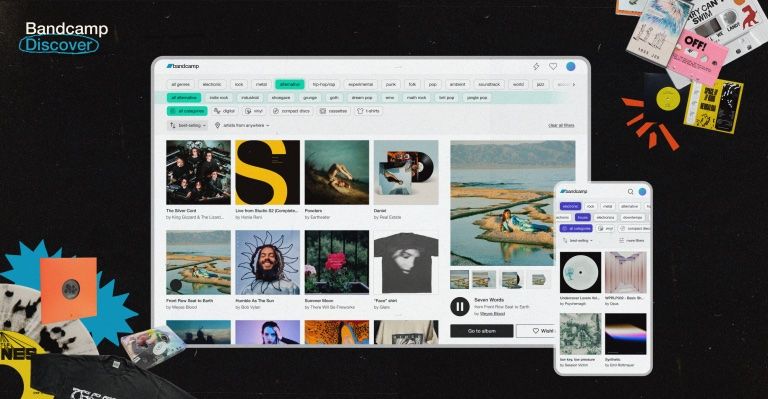
- Bandcamp is the obvious answer – choose the format after you pay, the artist keeps a bigger cut, re-download in WAV or AIFF any time. The search is rough and there’s no proper cart for grabbing a set’s worth of tracks in one pass, but more of your money reaches the people who made the record.
- Traxsource holds up for house and techno, with an interface most people find less painful than Beatport’s.
- Beatport still has the biggest catalogue and still frustrates everyone who uses it, slow, with a search that misses tracks you know are in there.
- There are other smaller startups we’ve seen mentioned – but none we’ve reviewed personally. Have an idea? Let us know in the comments.
One practical move for DJs who had a Juno account: log in! Your last cart and last wishlist are still visible there, and you can re-download anything you already bought. You can pull that list now and start rebuilding it elsewhere.
As always, we recommend keeping your own backup of every purchase, somewhere that isn’t just on one company’s servers. Juno’s parting lesson is that anything on the internet, even a 15-year-old store, can close on a Tuesday with no warning, and the only backups that are safe are the ones you’re already holding.