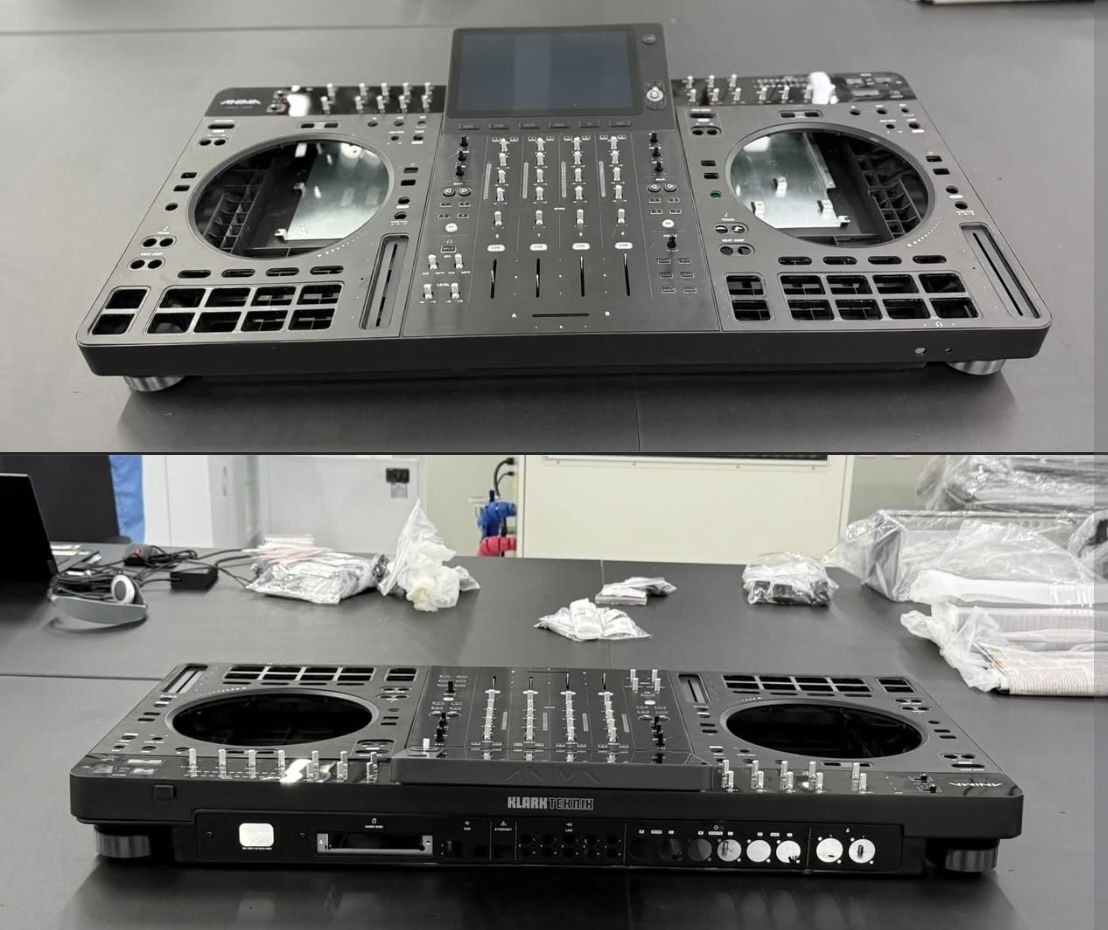
Behringer says it can sell DJs a four-channel standalone DJ system for $300 to $400 USD. On Tuesday night, they posted prototype photos on its Facebook page today with a pitch built on open hardware and “no proprietary lock-in”. If price makes it to actual retail release, it’s under a sixth of what Denon charges for the Prime 4 G2 ($2,599), and under an eighth of the AlphaTheta XDJ-AZ ($3,449).
Klark Teknik ANIMA prototype: what the photos show
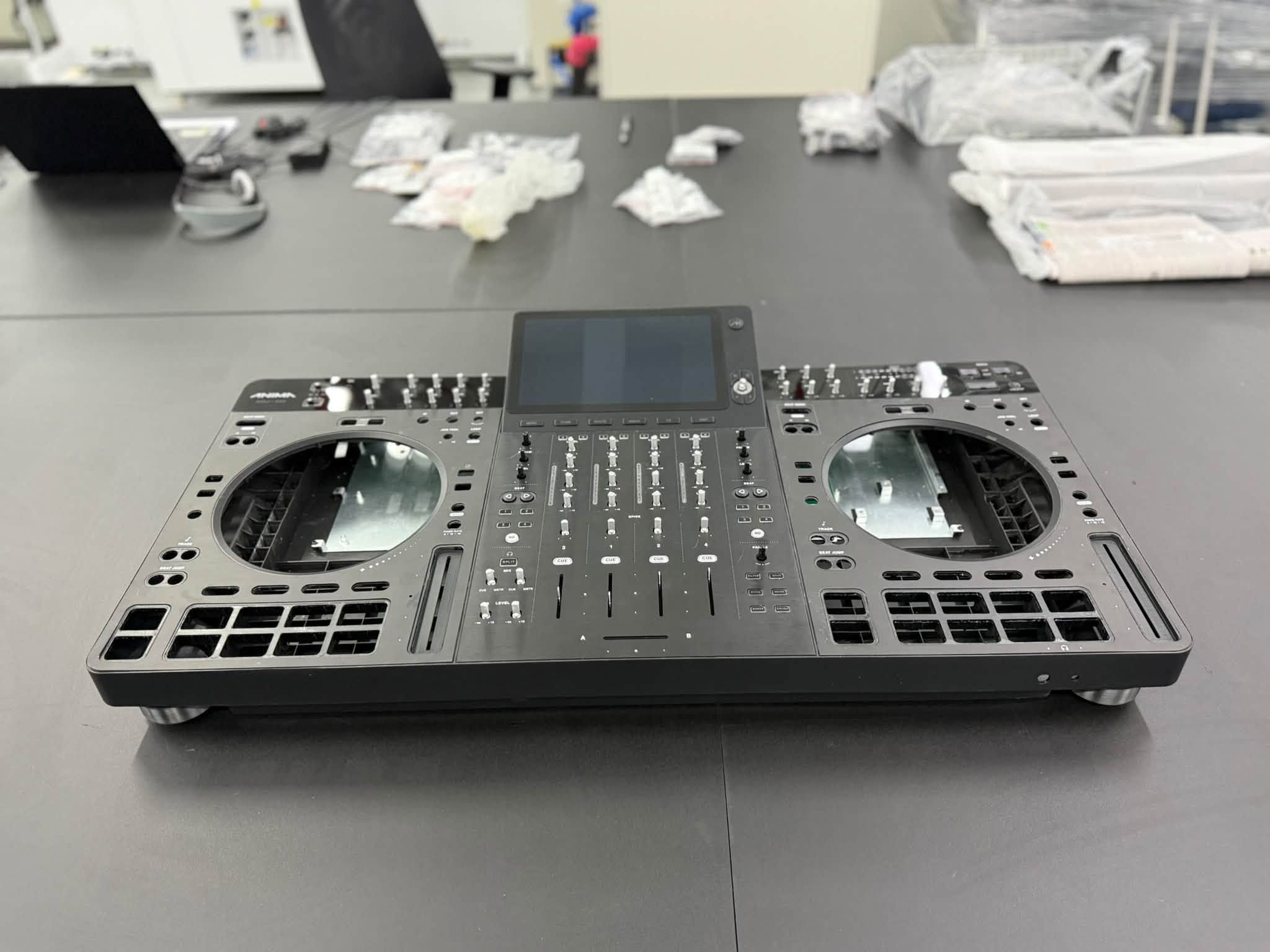
These are bare prototypes at a factory. Jogs and pads aren’t installed, but the layout reads clearly: four channels, eight pads on each deck, long pitch faders, and a touchscreen in the middle that folds flat. The top plate says “ANIMA”. Around back, there’s a bay labeled HARD DISK, USB, Ethernet, a row of line jacks, XLR outs, and two mic inputs.
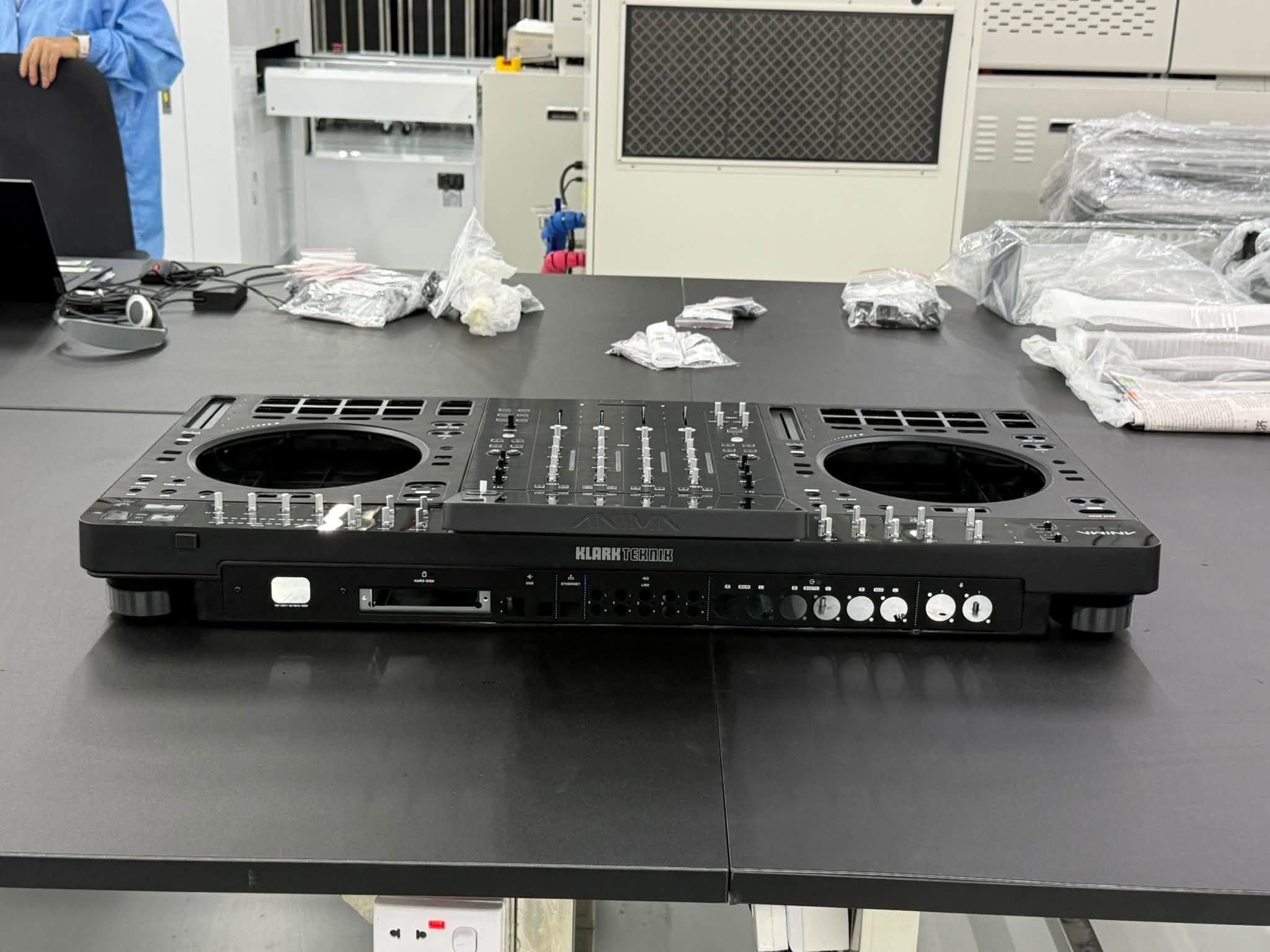
The badge on that rear panel says Klark Teknik. That’s the British company behind the DN360 graphic EQ that lived in touring racks for decades, and Music Tribe, Behringer’s parent company, has owned it since 2009. Behringer added a #klarkteknik tag to their Facebook post, so the badge looks deliberate. This could be the name that goes on the final product (since the CMD product family of controllers is long over).
Behringer’s open source hardware is already on GitHub
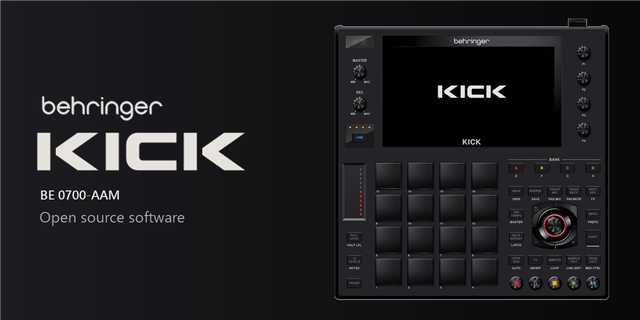
Music Tribe has put the full source for its first open hardware product, the Behringer Kick / BE 0700-AAM groovebox, on GitHub under AGPL-3.0. Their org page says that they’ll deliver schematics and bootloaders for its hardware, and notes that their community will vote on what gets built next. As of the time I wrote this, nothing DJ-related is posted there yet, but I suspect it will rely on a similar codebase.
This is the most interesting thing Behringer has pointed at DJs since the CMD controllers in 2013. TriMixxx just showed an open source deck can join a Pro DJ Link network next to real CDJs. If you put that kind of software on a cheap Linux standalone with an Ethernet port, you’ll get something AlphaTheta and inMusic will have to take seriously.
Where could an open source DJ standalone go?
The jog “wells” in the photos are empty, and plenty of folks reacting on Facebook seem to be hoping for motorized platters. I’d bet against that at $300, since motors will add substantial cost. The better bet on open hardware would be a jog module that DJs could remove and replace with something else.
I also keep thinking about the Klark Teknik label on the back of the unit. These days, much of the Klark Teknik catalog is the plumbing between Behringer and Midas live gear, like the DN4816-U interface that acts as a bridge between StageConnect (“the future of XLR!”) and USB. A DJ standalone that runs straight into the house console over one single cable would be a really useful trick for mobile DJs and small venues, and it’s something AlphaTheta and Denon DJ units haven’t tried. This is speculation, but it would make sense for the KT badging.
Software is the big unknown. “Create your own software” almost reads as “I can put Rekordbox on it” and that isn’t happening. Rekordbox and Serato don’t run on Linux. Mixxx is the obvious default. If Behringer ships something built on it and publishes the drivers, features people want could show up in weeks instead of waiting years (or never, as is the case with the largest companies) for a corporate roadmap. AI coding tools are already making firmware hacks faster to build, so that could move quite fast.
Open schematics are only part of repairability. Even AlphaTheta / Pioneer DJ will sell you an (expensive) replacement pitch fader, so if Behringer wants “you own it” to mean something, it needs spare parts on the shelf and faders you can swap without a soldering iron, ideally with room for an Innofader or other very common, high-quality faders.
And if the device is released and works well, the next obvious move would be splitting it apart into decks/mixers. Open decks and an open mixer at Behringer prices, linked over Ethernet, is a club layout a lot more DJs could afford. Whether AlphaTheta would ever let a Behringer deck sit on Pro DJ Link next to CDJs is, uh, unlikely?
ANIMA price and release date: what we don’t know yet about the standalone
- What software/firmware ships in the unit? Someone buying a $350 standalone wants to plug in a Chroma Drive and DJ out of the box. If the onboard OS is half-finished, it’ll be a hard sell.
- Will the price really be this low? Originally the post said $400-$500, but the Facebook edit history made clear that they dropped it by $100 within the hour. This means it’s a price target and not a final cost. A touchscreen and a drive bay on a four-channel unit under $400 is aggressive, especially with memory prices continuing to get wrecked by AI / data center demands.
- When will it really come out? Behringer shows hardware early. It posted a mockup of an MPC-style box called Jam back in 2020, and six years later the closest thing to it, the Kick, is still a prototype.
There’s no spec sheet or ship date yet. Music Tribe notes that hardware ideas start in their open source Discord, so if you want motorized platters or a swappable crossfader, that’s the place to ask.