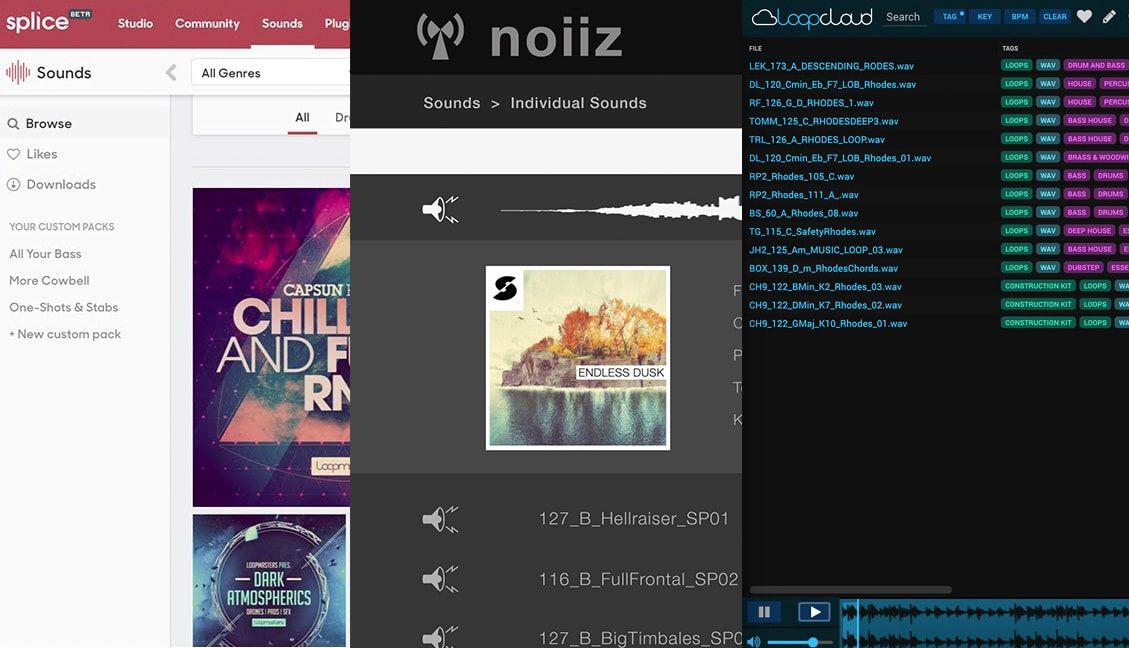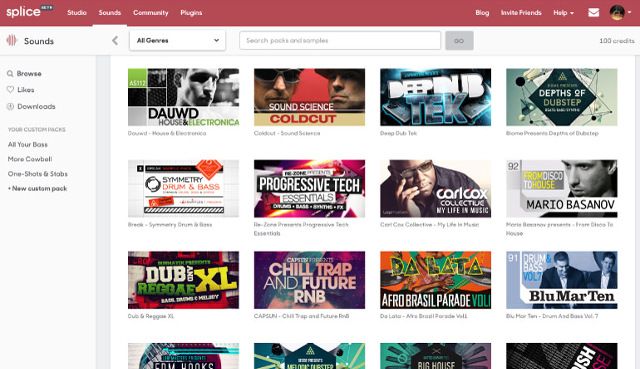
Not only is UMEK (aka Uros Umek) one of Europe’s most prolific makers of techno and tech-house tracks—the Slovenian DJ/producer is also a machine when it comes to crafting sample packs for others to use in the studio. Loopmasters recently released UMEK’s newest sample collection, Loops From Behind the Iron Curtain—2.7 GB of loops, one-shots, and synth presets named after his renowned radio show—so we talked with him about his sampling philosophy and what it takes to build such a package.
DJ TechTools: Describe the process you take when you start to create a sample pack. Do you create every new sample from the ground up, or are you often pulling from old samples on your hard drive?
UMEK: I created most of this pack from scratch. I started with producing a kick, working on basslines, drums, hi-hats, and other sounds. Basically, I did this in the same way I build my own tracks. But yes, I’ve also partially drawn from the old stuff piled on my hard drive, though you won’t be able to trace it back to the original samples, as I’ve chopped, pitched, transformed, turned over, and manipulated the old samples and mixed them with new sounds to create something totally different.
What was your approach to making your new Loopmasters pack?
My personal challenge was to try to do it completely on my laptop, during the trips between gigs. So I’ve made this one on the plane, in airport lounges, hotel rooms, driving between destinations—and I successfully made it to the point of the final mix and mastering, which I did in a proper studio.
You ditched your analog gear for a fully digital setup. Why?
It’s been a while since I completely digitized my DJ and studio setup—more than six years. Now I’m already thinking about adding some analog gear back to the studio to fiddle with knobs and press switches [laughs]. I decided [to go exclusively digital] when I felt I could not progress any more with the equipment I was using—and that was a good move as it opened new frontiers for me as an artist. The only thing that bothers me working with software is that you are bound to control every tool you are using with a mouse or a trackpad. Working with hardware synths, you are using both hands and you are always balancing the relation between at least two parameters at a time. Producing with software, you are fixing one parameter at a time—and that’s a small limitation. And also in the digital environment, I am tracking the numbers when I’m fine-tuning the sound, and because of that I sometimes do something more conservative than I would working with hardware. So the difference is that in software I rely on my eyes, while I trust my ears more when working with hardware gear. The question is not which is better—analog or digital. It’s just different, which makes both approaches interesting.
What are most people looking for when they buy a sample disc?
I can’t speak for other producers, but I can say for myself that I’m looking for good, interesting, fresh loops, kicks, and other sounds I could use to create new tracks. Usually some sample or sound triggers my brain, I get an idea for a track and I start working, though most of the time I have to additionally rework a particular building block to sound just the way I want it to. It can be a loop or a bassline, a kick or anything else. When I hear a particular sound, I start putting together the other elements around it and the whole track starts to grow in my mind. I just have to go to the studio and express the idea. I’d say most of producers are looking for an inspiration when working with sample banks.
What particular skills do producers need to make a really good sample disc?
That varies from producer to producer. My approach is the same as when I produce new tracks or remixes. I always start by working on drum loops, I continue with basslines, kicks, melodies, and so on. I pay a lot of attention to the quality of every sound and loop to make sure that it can be used. I still believe it’s better to use a sample that was used many times before if you can do something fresh with it than creating a total novelty that’s crap and can’t be used for creating a good track at all.
What are the most important things to remember or think about when creating a sample pack, and why?
I’ve actually never thought about that, as I never have creative blocks, and just do things. The only thing I was really thinking about was to create this on my laptop. But since you asked, I guess my approach is utilitarian: I always create loops that could be used for developing new tracks, when I produce them for my own tracks or when I’m producing a sample pack like this one. Speaking of which, I also hope that producers from other genres, not only those who are in techno or tech-house, will check my sample pack as I believe at least some of these loops and samples could be building blocks for some very interesting tracks of other styles.
It’s also very important to produce good and healthy sounds—something that is done just the right way. You can’t sell loops and samples that are totally rough and not developed at all. But at the same time, you shouldn’t overproduce them; you have to leave some space for artists to tweak them. So, you have to put just enough equalizer on everything, as very skillful producers as well as newbies use these packs.
As there are already tons of loop packs created in the past, it’s hard to show something totally new. My guideline is: What will people be able to do with this? How will this influence their creativity? I sell my signature sound and people who buy these samples are probably looking for some elements from my production that they would like to incorporate into their own productions. And there are others who use sample packs to learn how to produce music. They can study my approach, how I use samples in my production; they can try to imitate this or try to do stuff differently. Producing music from samples can be a good learning process for young producers.
You’ve said that you’re a big user of sample packs yourself. What are some of your favorites?
I buy heaps of samples every week. Right now I particularly like working with samples from K-Size. I used to work a lot with Waveform Recordings sample packs and the ones from Bedroom Music are generally very good as well.
What’s your general philosophy when it comes to sampling, particularly from other people’s records?
My policy on sampling is that if a person who owns copyrights allows you to use a sample of his work, then there’s no problem. Do it, and do it in a way that you bring something fresh to the table. But you can only release tracks with samples that are legally clean.
I have periods when I work with samples a lot and times when I don’t use them at all. Right now, I’m again in my sampling period. For this pack I did not sample any particular track, though I do that sometimes. So far I’ve sampled everything there is to sample. After all, I used to co-run a world-famous techno label named Recycled Loops, with Valentino, which was known for releases that were made more or less from samples and loops. We only produced some basslines with synths; everything else was a collage of samples.
I’m a very future-bound artist—I look forward all the time—but nonetheless, I like to take something from the past and rework it in a modern style. This way you can give new life to a classic track. It’s hard to [beat] the original, but I need to rework a classic track at least a bit to fit it into my contemporary sound.